


Read More
Authors: Vitalika Editorial Team ·
Supervisor: Dr. Gilani, MD
Last updated: January 2, 2026 · 6 min read
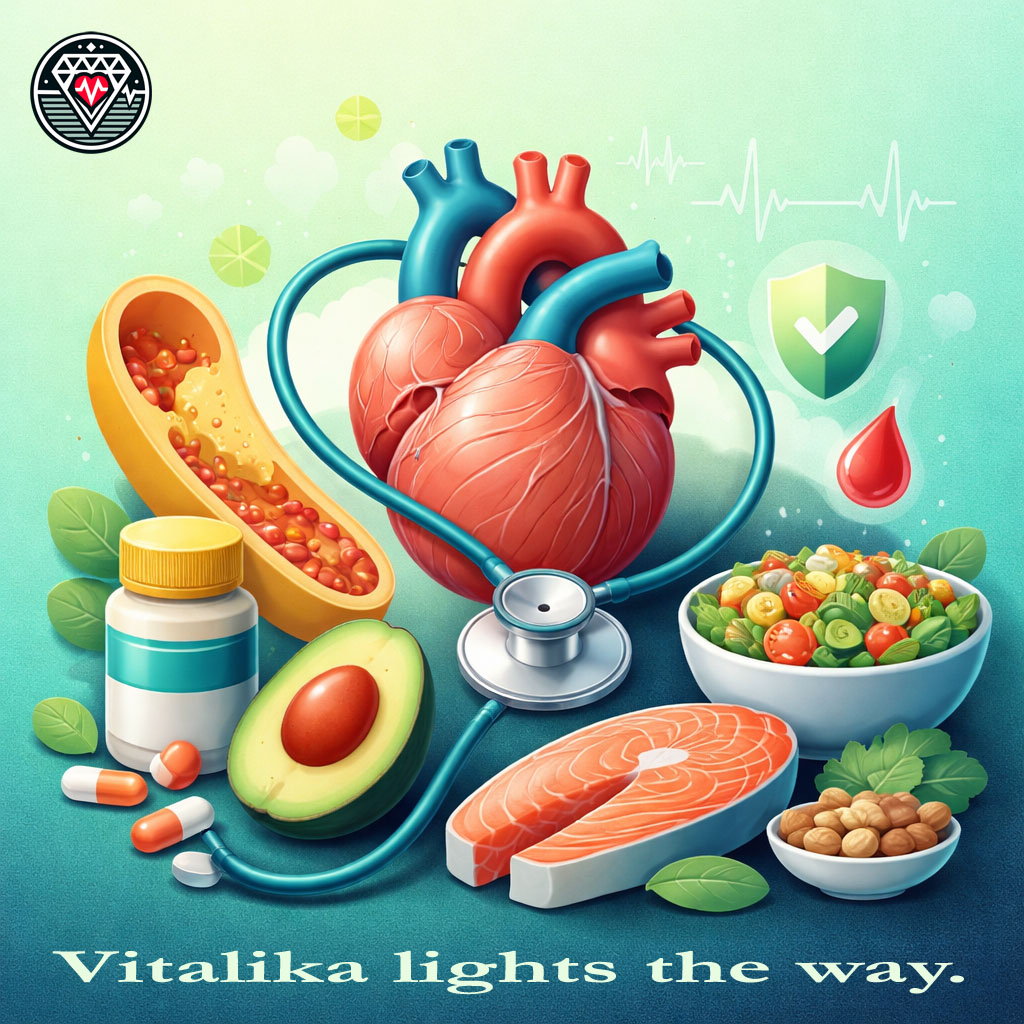
Cholesterol often gets blamed as the villain behind heart attacks and strokes. But the truth is far more nuanced. Cholesterol is a vital structural component of every cell in your body, supports hormone production, helps create vitamin D, and plays a major role in digestion through bile formation. Without Cholesterol, your body simply cannot function.
However, when Cholesterol levels fall out of balance—especially when certain lipoproteins become too high—it increases the risk of cardiovascular disease. Understanding how Cholesterol behaves, moves through the bloodstream, and how lifestyle and genetics affect it is the key to keeping your heart and body healthy.
Cholesterol is a waxy, fat-like substance produced by your body—mainly in the liver—and also obtained through food. It is essential for:
Your body tightly regulates Cholesterol through a feedback system: when internal levels drop, production increases; when levels are high, production slows down. But diet, genetics, and lifestyle can overwhelm this system.
Cholesterol doesn’t float freely in your bloodstream because it’s not water soluble. Instead, it travels in special “vehicles” called lipoproteins—combinations of fats and proteins that transport Cholesterol to and from tissues.
Different lipoproteins serve different roles, and understanding them helps you understand your risk.
Produced by the liver
Carries triglycerides and Cholesterol to tissues
Eventually converts into LDL after triglycerides are removed
LDL delivers Cholesterol to body tissues
High levels encourage plaque buildup inside arteries
This buildup leads to inflammation, narrowing, and increased risk of heart attack and stroke
That’s why LDL is commonly labeled “bad Cholesterol.”
HDL works like a cleanup crew
It collects excess Cholesterol from tissues and blood vessels
Returns it to the liver for breakdown and excretion
This process, called reverse Cholesterol transport, protects your heart
When LDL rises and HDL falls, risk increases. When HDL is higher and LDL lower, your heart is generally safer.
When LDL remains in the bloodstream too long, it can stick to artery walls. The immune system sends special cells (macrophages) to clean it up. But when they become overloaded with fat, inflammation worsens, forming thick plaques. Over time, these plaques:
This silent buildup is why managing Cholesterol is critical even when you feel perfectly healthy.
Several factors influence Cholesterol levels, including:
Some people inherit genetic conditions like familial hyperlipidemia, which prevents the body from properly clearing LDL.
High Cholesterol is often called a “silent killer” because it usually has no symptoms. Many people discover it only after a routine blood test—or unfortunately, after a cardiovascular event such as a stroke or heart attack.
Rarely, visible Cholesterol deposits can appear as:
However, waiting for symptoms is dangerous. Testing is essential.
Doctors order a lipid profile, which measures:
Risk is assessed alongside age, blood pressure, smoking status, medical history, and tools like QRISK calculators. Treatment decisions are individualized.
While your liver makes most of your Cholesterol, diet plays a powerful role in shaping your levels.
These trigger more VLDL and LDL production, increasing plaque risk.
Fiber especially helps block Cholesterol reabsorption, supporting healthier levels.
For decades people were told to avoid eggs due to their Cholesterol content. But science has evolved. Most of your blood Cholesterol isn’t from food Cholesterol—it’s produced internally based on fat intake.
Eggs contain:
For most healthy individuals, one egg a day is generally considered safe and nutritious. What matters more is overall diet quality.
Small daily choices can dramatically improve Cholesterol balance and heart health.
Resistance training and aerobic exercise help:
Smoking damages vessels and accelerates LDL buildup.
Excess alcohol contributes to liver dysfunction, triglyceride elevation, and heart disease risk.
Weight loss often improves lipid profile and overall cardiovascular health.
Plant sterols, stanols, and omega-3 fish oils may modestly reduce Cholesterol levels, but evidence is still evolving regarding their full cardiovascular impact. They should not replace a healthy diet or prescribed treatment. Always consult a healthcare professional first.
Some individuals, especially those with genetic predispositions, need medication.
Most commonly prescribed
Reduce liver Cholesterol production
Help lower LDL significantly
Your doctor selects treatment based on your risk profile, lab results, and guidelines.
Cholesterol itself is not the enemy—it is essential. Problems arise when the balance shifts. The goal is not to eliminate Cholesterol, but to keep LDL low, HDL healthy, arteries clear, and your heart protected.
Through informed lifestyle choices, regular testing, and medical guidance when needed, most people can successfully manage Cholesterol and greatly reduce cardiovascular risk.
Your health journey shouldn’t be confusing or overwhelming. If you’d like help managing your Cholesterol, understanding your heart risk, booking appointments with doctors or healthcare providers, communicating directly with them, joining supportive health communities, or checking your health status through multiple physical and mental wellness indicators, I warmly invite you to explore the Vitalika mini-application. It’s a practical, user-friendly way to stay proactive, informed, and supported in your health journey. Stay healthy, stay informed, and take care of your heart!
References
Medical Disclaimer: This article is for informational purposes only and does not constitute medical advice. Always consult a qualified healthcare provider regarding any medical condition or before making changes to your health regimen.


