


Read More
Auteurs : Équipe éditoriale de Vitalika ·
Superviseur : Dr. Gilani, MD
Dernière mise à jour: January 3, 2026 · 5 min de lecture
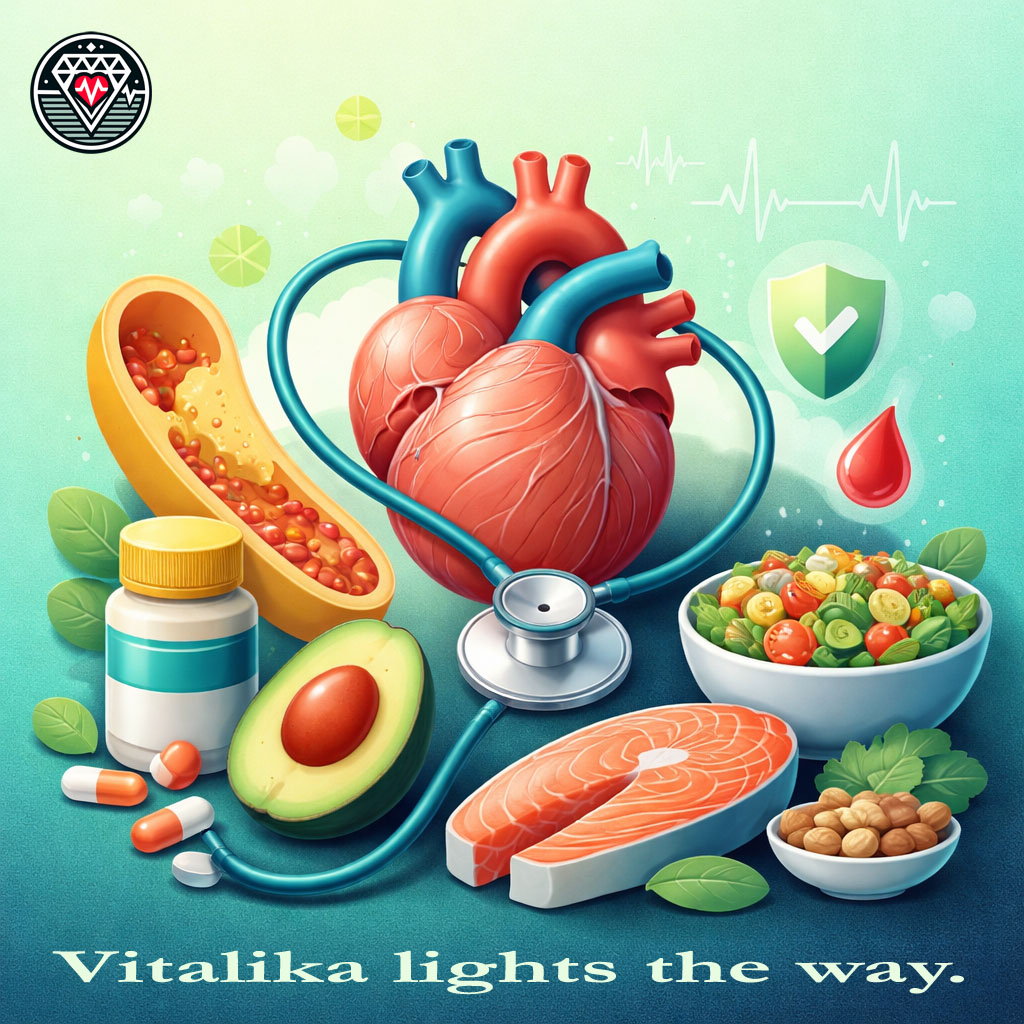
When most people hear the word Cholesterol, they immediately think of danger, blocked arteries, heart attacks, and strict diets. But the truth is much more nuanced. Cholesterol is not an enemy by default. In fact, your body needs it to survive. Cholesterol is an essential structural component of every cell membrane, helping maintain flexibility and stability. It also plays a fundamental role in producing steroid hormones, bile acids, and vitamin D.
However, like many things in health, balance matters. When Cholesterol levels—especially certain types—become too high or poorly regulated, risks increase. That’s when it may contribute to plaque buildup inside blood vessels, leading to cardiovascular diseases such as heart attacks and strokes.
In this article, let’s explore Cholesterol in a friendly, science-based, and practical way so you can understand it clearly and manage it wisely.
Cholesterol does not travel freely in the blood. Instead, it is carried inside special particles called lipoproteins, which are made of lipids and proteins. These particles help move Cholesterol to where it is needed—or back to where it should be removed.
Different lipoproteins work differently depending on their density and composition. Among them, two are especially important:
Understanding these is crucial to understanding your heart health.
LDL carries Cholesterol from the liver to other tissues. This is important because cells need Cholesterol. But when too much LDL circulates in the blood, it tends to accumulate in artery walls. Over time, this buildup can:
These plaques can rupture or form clots, dramatically increasing the risk of heart attack or stroke. That’s why high LDL is strongly linked to cardiovascular disease and why healthcare professionals take it so seriously.
HDL does almost the opposite of LDL. It helps remove excess Cholesterol from the bloodstream and tissues and returns it to the liver. The liver then eliminates it through bile. This process is known as reverse Cholesterol transport and is highly protective.
Higher HDL levels generally mean better cardiovascular protection because HDL helps reduce plaque formation and inflammation.
Your body is incredibly intelligent. Many cells, especially in the liver, produce Cholesterol on their own. When internal Cholesterol levels drop, production increases. When levels rise, production slows. This natural negative feedback mechanism helps maintain balance.
However, genetics, diet, hormonal factors, and lifestyle can disrupt this balance. When that happens, Cholesterol levels may become unhealthy.
Most of your Cholesterol is produced inside your body—mainly in the liver.
Cholesterol also comes from certain foods, especially animal products like meat, dairy, and eggs. Interestingly, Cholesterol in food is not always the main culprit for high Cholesterol in the blood. More important are types of fats consumed:
This means your overall diet pattern matters more than avoiding one single food like eggs.
When you eat fat, your digestive system breaks it into absorbable parts. These fats, including Cholesterol, travel to the liver where they are packaged into lipoproteins such as VLDL (Very-Low-Density Lipoprotein). As VLDL circulates, tissues remove triglycerides from it, eventually turning it into LDL. Cells then absorb LDL for use—unless excess LDL remains, which leads to problems.
Meanwhile, HDL circulates to collect extra Cholesterol and bring it back to the liver. Balance between LDL and HDL is key.
Several factors influence blood Cholesterol:
Sometimes, despite a healthy lifestyle, genetics dominate—but lifestyle changes still matter enormously.
High Cholesterol is often called a silent condition because it rarely causes symptoms. Many people only discover it through a blood test ordered by a doctor.
In extreme or rare cases, deposits may appear in the eyes or tendons, but most people never see warning signs until cardiovascular disease appears. That’s why regular health monitoring is vital.
Absolutely—diet plays a major role. Helpful choices include:
Some supplements like plant sterols, stanols, and omega-3s may help lower Cholesterol levels, but they should never replace a balanced lifestyle or medical advice.
To support healthy Cholesterol and cardiovascular health:
Physical activity has been shown to reduce LDL and raise HDL. Even small, consistent steps can make a meaningful difference.
Sometimes lifestyle changes alone are not enough, especially when genetics or very high Cholesterol levels are involved. Doctors may prescribe one or more of the following:
Treatment decisions depend on overall cardiovascular risk, not just one lab value. Doctors often use risk calculators to estimate your likelihood of heart attack or stroke and recommend tailored treatment.
To keep Cholesterol at healthy levels:
Your heart deserves care, and understanding Cholesterol is one of the most powerful health decisions you can make.
If you care about your Cholesterol, heart health, and overall wellbeing, tools that simplify healthcare access can truly help. With Vitalika’s mini health application, you can:
Start exploring smarter, easier, more connected healthcare today with Vitalika—and give your heart and health the care they truly deserve.
Références
Avis Médical: Cet article est fourni à titre informatif uniquement et ne constitue pas un avis médical. Consultez toujours un professionnel de santé qualifié avant tout changement lié à votre santé.


