


Read More
Authors: Vitalika Editorial Team ·
Supervisor: Dr. Gilani, MD
Last updated: October 5, 2025 · 6 min read
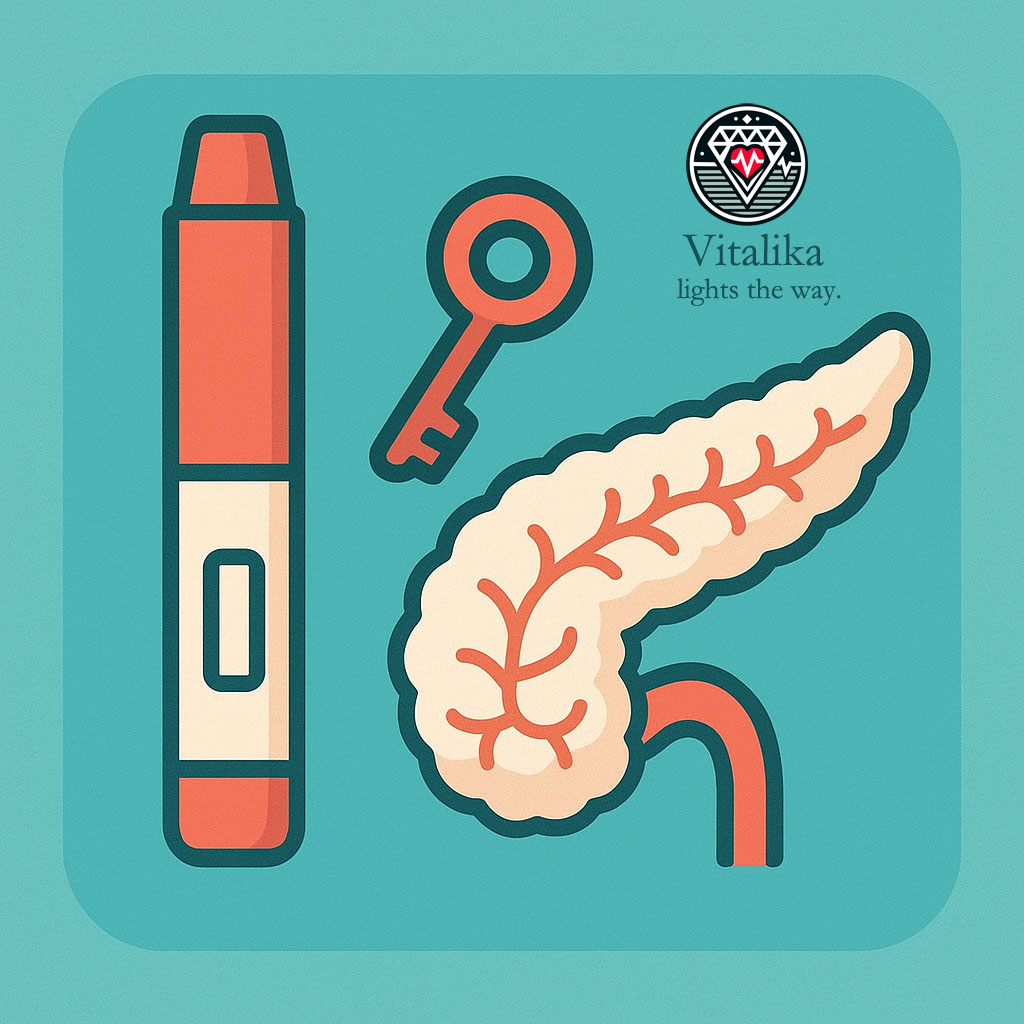
Have you ever wondered what happens to that delicious meal you just ate? As your body breaks down food into energy, a superhero hormone swoops in to save the day. This hero is called insulin.
Simply put, insulin is a natural hormone produced by a tiny organ behind your stomach called the pancreas. Its main job is to act like a key, unlocking the doors of your body's cells to let glucose (sugar) in. Glucose is your body's primary fuel source, and without insulin, it would just float uselessly in your bloodstream. Think of it as the delivery driver that ensures all the energy from your food gets where it needs to go.
When you eat, especially foods rich in carbohydrates, fats, and proteins, your digestive system gets to work. It breaks everything down into smaller, usable components:
These components are then absorbed into your bloodstream. As your blood glucose levels rise, your pancreas senses this and releases a precise amount of insulin. Insulin then goes to work, targeting three main organs:
Essentially, insulin works to clear glucose, fatty acids, and amino acids from your blood, keeping your system balanced and preventing dangerously high levels.
What happens if your body can't produce or use insulin effectively? This is the core issue behind diabetes.
In Type 1 diabetes, the pancreas stops producing insulin altogether. The body's immune system mistakenly attacks and destroys the insulin-producing cells. With no insulin, glucose can't get into the cells and builds up to dangerous levels in the blood. For these individuals, insulin therapy is not an option—it's an absolute necessity. They must take insulin for the rest of their lives to survive.
Type 2 diabetes is a bit different. Here, the pancreas often still produces insulin, but the body’s cells become less responsive to it. This condition is known as insulin resistance. Think back to our key and door analogy: the key is there, but the lock is "jammed" and won't let the glucose in. To compensate, the pancreas works overtime to produce more insulin, but over time, it can't keep up. This results in high blood sugar levels. While some people with Type 2 diabetes can manage their condition with lifestyle changes and oral medications, many eventually require insulin to maintain healthy blood sugar levels.
Many people wonder why insulin can’t be taken as a pill. The reason is simple and fascinating: insulin is a protein. If you were to swallow it, your stomach's digestive acids would break it down before it could even get to your bloodstream. It would be completely useless.
This is why insulin must be delivered directly into your body, where it can be absorbed effectively. While research is ongoing for oral insulin, for now, the most reliable and safe methods are through injection or a pump.
If you need to take insulin, rest assured that modern methods make it much easier than you might imagine. Tiny, fine needles and convenient pen devices have revolutionized insulin delivery, making it less painful and more discreet.
Insulin is typically administered subcutaneously, which means into the fatty tissue just under your skin. The abdomen is the most common and effective site, but you can also use your thighs or the back of your arms. Injecting into fatty tissue allows the insulin to be absorbed slowly and steadily, which is ideal for long-term effectiveness. Injecting into muscle is not recommended as it can be absorbed too quickly and cause a sudden drop in blood sugar.
Insulin is a sensitive medication. To ensure its effectiveness, here are a few key storage tips:
Not all insulin is created equal. Different types are designed to act at different speeds and for different durations, providing tailored coverage for various needs. They're usually categorized by how quickly they start working and how long they last.
Managing insulin is a partnership between you and your healthcare team. It's crucial to understand:
Understanding insulin is the first step toward better health management. Whether you're a patient, a caregiver, or simply curious, knowledge is a powerful tool.
Managing your health and well-being should be seamless. To make that journey easier, we invite you to explore the Vitalika mini-application. With Vitalika, you can effortlessly book appointments with doctors and other healthcare providers, communicate with them directly, and join health-focused communities. The app also helps you monitor your physical and mental health with various trackers and indicators, empowering you to take proactive steps toward a healthier life.
References
Medical Disclaimer: This article is for informational purposes only and does not constitute medical advice. Always consult a qualified healthcare provider regarding any medical condition or before making changes to your health regimen.


